
Field-Grown vs. Container Trees: Which Survives Harsh Nebraska Winters Better?
- 22
- Sep
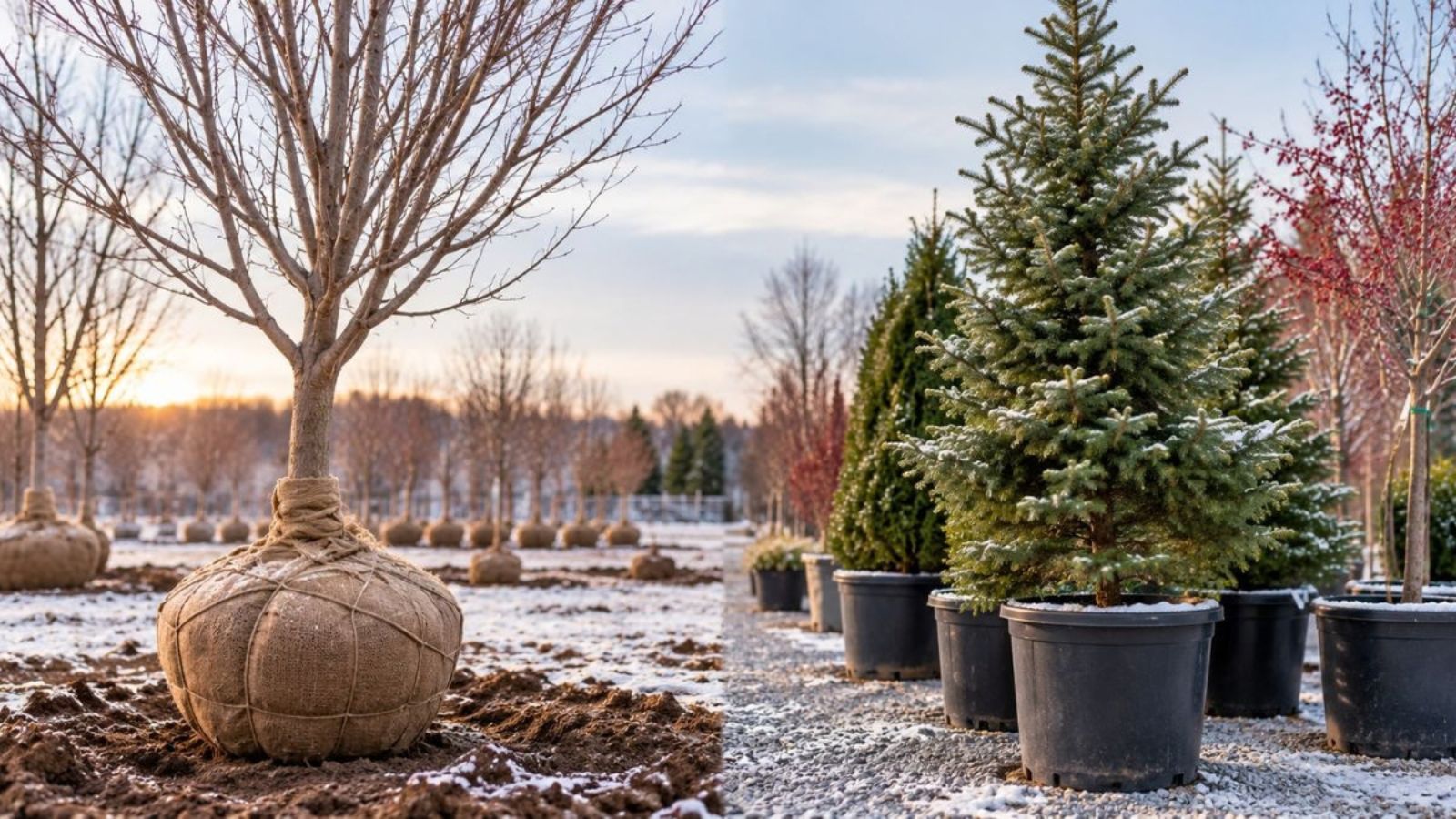
Nebraska winters can be tough on newly planted trees, especially during the first season when a tree is still adjusting to its new landscape. Freezing temperatures, dry winds, and sudden temperature changes can make the transition more demanding.
For homeowners choosing between different tree-growing methods, the field-grown vs. container trees comparison can affect how a tree handles a harsh Nebraska winter. The answer depends on more than whether a tree was raised in a field or a container.
Field-Grown and Container Tree Differences
The field-grown vs. container trees comparison starts with how each tree develops its root system and what happens during transplanting.
| Consideration | Field-grown tree | Container-grown tree |
|---|---|---|
| Growing environment | Develops in field soil | Develops within a container |
| Root development | Grows in open ground | Grows within limited space |
| Root loss | Some roots are removed during digging | Most existing roots remain |
| Primary concern | Root-ball integrity | Circling or congested roots |
| Larger sizes | Commonly available | More often associated with smaller sizes |
| Handling | Root ball must stay intact and moist | Container media can dry quickly |
Each method creates different transplanting considerations. A healthy tree with a sound root system can establish successfully when it is appropriate for the site.
Root Condition and Winter Establishment
A newly planted tree enters its first winter before its roots have fully expanded into the surrounding soil. Root condition is therefore especially important for winter survival during establishment.
For container-grown trees, look for:
- Circling roots: Roots following the container wall may continue growing in that pattern.
- Root congestion: Tightly packed roots can make expansion more difficult.
- Dry root media: Container material can lose moisture while awaiting planting.
Field-grown trees have different concerns:
- Root-ball integrity: Soil around the roots should remain intact.
- Moisture: The root ball should not dry out before planting.
- Root disturbance: Rough handling can damage roots even when the canopy looks healthy.
For homeowners, examining the root system provides more useful information than judging a tree solely by its production method.
Nebraska Growing Conditions Matter
Growing history can provide useful context when selecting a tree for a Nebraska landscape. A tree raised in Nebraska or a similar regional climate has developed under seasonal conditions that may be more familiar than those faced by a tree from a substantially different environment.
The planting site’s exposure also matters. Open locations with strong winter winds can increase moisture loss and add stress to a newly established tree.
Before planting, consider:
- Growing location: Where was the tree produced?
- Species suitability: Is the species appropriate for the local climate and landscape?
- Wind exposure: Will the site leave the tree exposed to strong winter winds?
- Soil drainage: Does the planting area drain properly?
Growing history is useful context, but it should be evaluated alongside the tree’s condition and planting site.
Planting Quality Before Winter
Even a well-grown tree can struggle if it is planted incorrectly. The goal is to give the roots adequate contact with surrounding soil without restricting healthy development.
Important considerations include:
- Planting depth: Position the root flare correctly rather than burying it too deeply.
- Soil condition: Compacted soil can restrict root expansion and water movement.
- Drainage: Poorly drained soil can leave roots excessively wet.
- Wind exposure: Open locations can increase moisture loss.
- Available space: Roots need room to expand beyond the original root ball or container.
A tree entering winter with damaged roots, poor soil conditions, or inadequate moisture may already be under additional stress.
First-Winter Care and Protection
Planting is only the beginning of establishment. Newly planted trees need appropriate care while their roots adjust to the surrounding soil.
Watering should take into account:
- Recent rainfall
- Soil moisture
- Drainage
- Temperature
- Whether the ground is frozen
Cold weather does not mean a newly planted tree can be ignored. Fall dry periods and winter winds can contribute to moisture stress, while excessive watering can cause problems in poorly drained soil.
Mulch can help conserve moisture and moderate soil temperatures around the root zone. Keep it away from direct contact with the trunk.
If an early freeze arrives soon after planting, avoid disturbing frozen soil around the root zone. Continue monitoring moisture conditions and make adjustments when conditions allow.
Choosing the Right Tree for the Site
The field-grown vs. container trees question does not have a universal winner for harsh Nebraska winters. A healthy, properly handled field-grown tree can be a practical choice, particularly for larger landscape trees. A healthy container-grown tree can also establish successfully when its roots, species, and planting conditions are appropriate.
Before choosing, homeowners should evaluate:
- Root condition: Look for healthy roots and signs of damage, circling, or congestion.
- Growing history: Consider where and under what conditions the tree was raised.
- Species suitability: Choose a species appropriate for the specific Nebraska site.
- Planting location: Evaluate soil, drainage, wind exposure, sunlight, and root space.
- Establishment care: Plan for appropriate watering, mulch, and monitoring.
Neither production method guarantees survival through a harsh Nebraska winter. The better selection is the individual tree with sound roots, appropriate species characteristics, suitable site conditions, careful planting, and adequate establishment care.
Frequently Asked Questions
What is the main root concern with a container-grown tree?
The main concern is often root restriction from circling or congested roots. Inspecting the root system before installation can help identify these problems.
How should a balled-and-burlapped tree be handled before planting?
The root ball should remain intact and should not be allowed to dry out. Careful handling helps prevent unnecessary root disturbance.
Does the planting location affect winter stress?
Yes. An exposed location can subject a newly planted tree to stronger winter winds and greater moisture loss. Drainage and available root space also affect establishment.
Can an early freeze affect a newly planted tree?
An early freeze can add stress before the root system becomes established. The potential impact depends on species, tree condition, planting timing, site exposure, and weather conditions.
When should winter damage be evaluated?
Some winter damage becomes easier to identify as the tree resumes growth. Dead or damaged branches, delayed leaf development, or other abnormal growth can warrant evaluation by a qualified tree professional.
Arbor Hills Tree Farm & Nursery Omaha
We provide the highest quality field-grown Nebraska Trees and Shrubs – directly to our customers, at the lowest possible price.
Whether you are looking for trees for:
- new home landscaping
- wind blockage
- commercial or residential
Simply select the tree(s) you want, and they will be ready for pickup or delivery the following Saturday Morning. The trees are easy to handle and plant. Click here for more information.

