
Staking Young Trees in Midwest Winds: When Support Helps and When It Hurts
- 22
- Jun
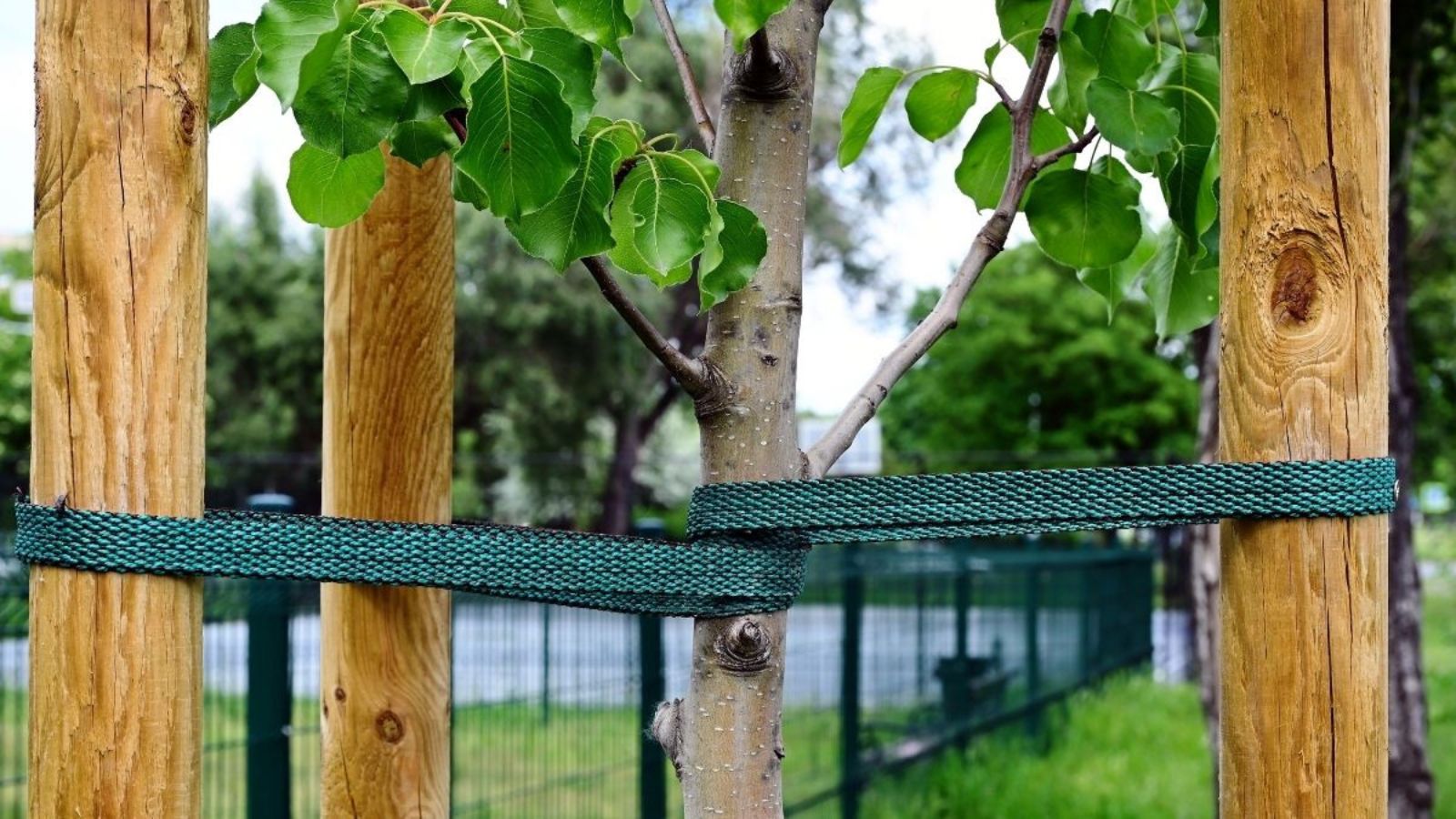
Staking young trees in the Midwest winds sounds like a straightforward decision, but it is one of the most misunderstood aspects of tree planting. Many homeowners assume every new tree requires support, regardless of its size, species, or planting conditions.
At Arbor Hill Tree Farm, we’ve seen newly planted trees thrive without staking, while others struggled because stakes remained in place too long. We’ve also watched properly staked trees come through severe weather events with minimal damage.
The challenge is knowing when support provides meaningful stability and when it can actually interfere with healthy development.
Midwest Wind Challenges for Young Trees
Many planting guides don’t fully reflect how trees respond to open, windy Midwest sites. In Nebraska especially, wind exposure can shape early establishment in ways that surprise new homeowners.
Young trees typically face a combination of conditions, including:
Limited root extension
Roots are still confined to the original root ball and have not yet anchored into the surrounding soil.
Constant wind pressure on the trunk
Open landscapes expose young trees to repeated wind stress before they are fully established.
Early-season leaning after storms
Some trees appear to lean slightly after weather events, even when no actual damage has occurred.
In many cases, this leaning is temporary and reflects root adjustment rather than structural failure. Understanding this helps avoid unnecessary corrective action during the establishment phase.
Common Misconception About Tree Staking
A frequent misunderstanding is that staking is automatically required for every newly planted tree. In practice, many trees establish well without added support when planting conditions are correct.
In most cases, stronger long-term structure develops when trees are allowed to respond naturally to their environment.
Key patterns observed in the field include:
Natural movement builds strength
Trees that flex slightly in the wind often develop stronger trunk structure over time.
Over-reliance on stakes can occur
Trees supported too rigidly for long periods may struggle once that support is removed.
Planting quality matters more than age
A well-planted young tree can often stand without assistance from the beginning.
Site conditions drive the decision
Wind exposure, soil type, species, and planting location matter more than a one-size-fits-all rule.
Professional arborists generally evaluate each planting site individually before deciding whether support is needed.
Situations Where Staking Young Trees in Midwest Winds Makes Sense
In our experience, temporary support is most useful when site conditions or tree characteristics create a higher risk of instability during establishment.
Common situations include:
- Large canopy trees with smaller root systems
Some trees arrive with substantial top growth but relatively limited root development. Strong winds can create enough leverage to shift the tree before roots become established. - Highly exposed planting areas
Trees planted in rural properties, new developments, or open acreage often experience greater wind exposure than trees protected by buildings or existing vegetation. - Loose or sandy soils
Certain soil conditions provide less immediate stability after planting. Temporary support can help prevent excessive shifting during the first growing season. - Trees that cannot remain upright naturally
If a newly planted tree consistently leans or rocks in the soil, staking may be necessary until roots gain a stronger hold.
Staking works best when it provides temporary stability during establishment rather than rigid support throughout the tree’s early growth.
How Improper Staking Can Create Long-Term Problems
Improper staking is often more damaging than no staking at all.
One frequent issue is simple neglect, where support systems are left in place long after planting. What begins as temporary stabilization can turn into a long-term restriction.
Common issues include:
- Bark damage from rubbing ties. Straps and ties can wear against the trunk as the tree grows and responds to weather conditions.
- Restricted trunk growth. Tightly secured materials can interfere with normal trunk development.
- Weak structural development. Trees that rely on support for too long may be less prepared to handle wind on their own.
- Reduced trunk taper. Growth patterns can become uneven when support remains too long.
A good rule is that support systems should provide stability without placing excessive restrictions on the tree as it establishes.
When to Remove Stakes
Stake removal timing depends on conditions rather than a fixed schedule.
A tree is often ready for removal when:
- It remains upright after wind events
- The root area no longer shifts in soil
- The trunk stands without assistance
- New growth appears consistent and healthy
- Regular checks matter because staking materials are often forgotten once growth begins.
Support should always be temporary, not permanent.
Frequently Asked Questions
How long should a newly planted tree remain staked?
Most trees only need staking during the early establishment period. The exact timing depends on species, site conditions, and wind exposure, but stakes should be checked regularly and removed once the tree can stand securely on its own.
Can staking damage a young tree?
Yes. If stakes or ties are too tight or left on too long, they can rub against the bark, restrict growth, and weaken trunk development. Proper setup and timely removal help prevent these issues.
Do all newly planted trees in Nebraska need staking?
No. Many trees establish well without support when planted correctly. Whether staking is needed depends on tree size, root stability, soil conditions, and exposure to strong Midwest winds.
What are the signs that a tree may need staking?
Staking may be needed if a tree leans after planting, shifts in the soil during wind, or has a large canopy relative to its root system. Excessive movement at the root ball is usually the main indicator.
Is it normal for a young tree to move in the wind?
Yes. Some movement is normal and even helpful. Light swaying encourages stronger trunk development as the tree establishes, as long as the root system remains stable.
Arbor Hills Tree Farm & Nursery Omaha
We provide the highest quality field-grown Nebraska Trees and Shrubs – directly to our customers, at the lowest possible price.
Whether you are looking for trees for:
- new home landscaping
- wind blockage
- commercial or residential
Simply select the tree(s) you want, and they will be ready for pickup or delivery the following Saturday Morning. The trees are easy to handle and plant. Click here for more information.

